

May 12, 2026
The quick version
- Flooring is the single most influential design decision in a luxury home. It sets the tone for every colour, material, and finish that follows.
- The best flooring for luxury homes balances aesthetics with lifestyle. Engineered timber, natural stone, large-format porcelain, polished concrete, and premium wool carpet each serve different zones of the home.
- Natural materials like timber and stone suit Perth’s climate and coastal lifestyle, and they age beautifully over decades.
- Continuity matters. Matching undertones and transitioning materials at natural breaks (like doorways) keeps an open-plan home feeling cohesive rather than chaotic.
- Perth’s high UV, humidity swings, and coastal sand all affect how flooring performs. Choosing the right material for the right space prevents costly maintenance headaches.
- Working with an experienced interior designer takes the overwhelm out of selections and ensures every surface works together as a whole.
You’ve spent months finding the right block, pictured the kitchen, and imagined the view from the primary suite. Then someone hands you a sample board with 400 timber swatches and asks you to choose the floor.
This isn’t a cosmetic decision. The floor is the material you’ll walk across barefoot every morning, that your kids will test with scooter wheels and dropped pasta bowls. The best flooring for luxury homes has to hold up to all of that and still make you stop in the hallway and think: this feels exactly right.
With insights from interior designer Nicola Draper-Henkel, who works with clients throughout Stannard’s custom home design process, this article explores the material, lifestyle and design considerations that shape flooring choices from the outset.
Why flooring sets the tone for everything else
There’s an unspoken rule among designers: you start with the floor and build the room from there. If the flooring is wrong, no amount of considered furniture or beautiful lighting can rescue the space. Across Stannard custom home builds, flooring is often one of the first selections considered, because it sets the direction for every finish that follows.
The floor is the largest continuous surface in any room. It dictates whether a space feels warm or cool, expansive or intimate. It influences how light behaves; pale timbers bounce natural light deep into a room, while darker materials absorb it, creating a moodier weight. And in the open-plan layouts that define most contemporary luxury homes in Perth, it shapes how every space flows into the next.
Nicola puts it simply: “The flooring is the foundation for their home.” Every other selection, from cabinetry to benchtops, wall colours to metallic finishes, needs to sit comfortably alongside whatever’s underfoot.
In a luxury home, flooring also carries real financial weight. A bespoke parquetry layout or premium wide-plank engineered timber can represent a significant portion of the interior budget. These aren’t decisions to make in a rush.
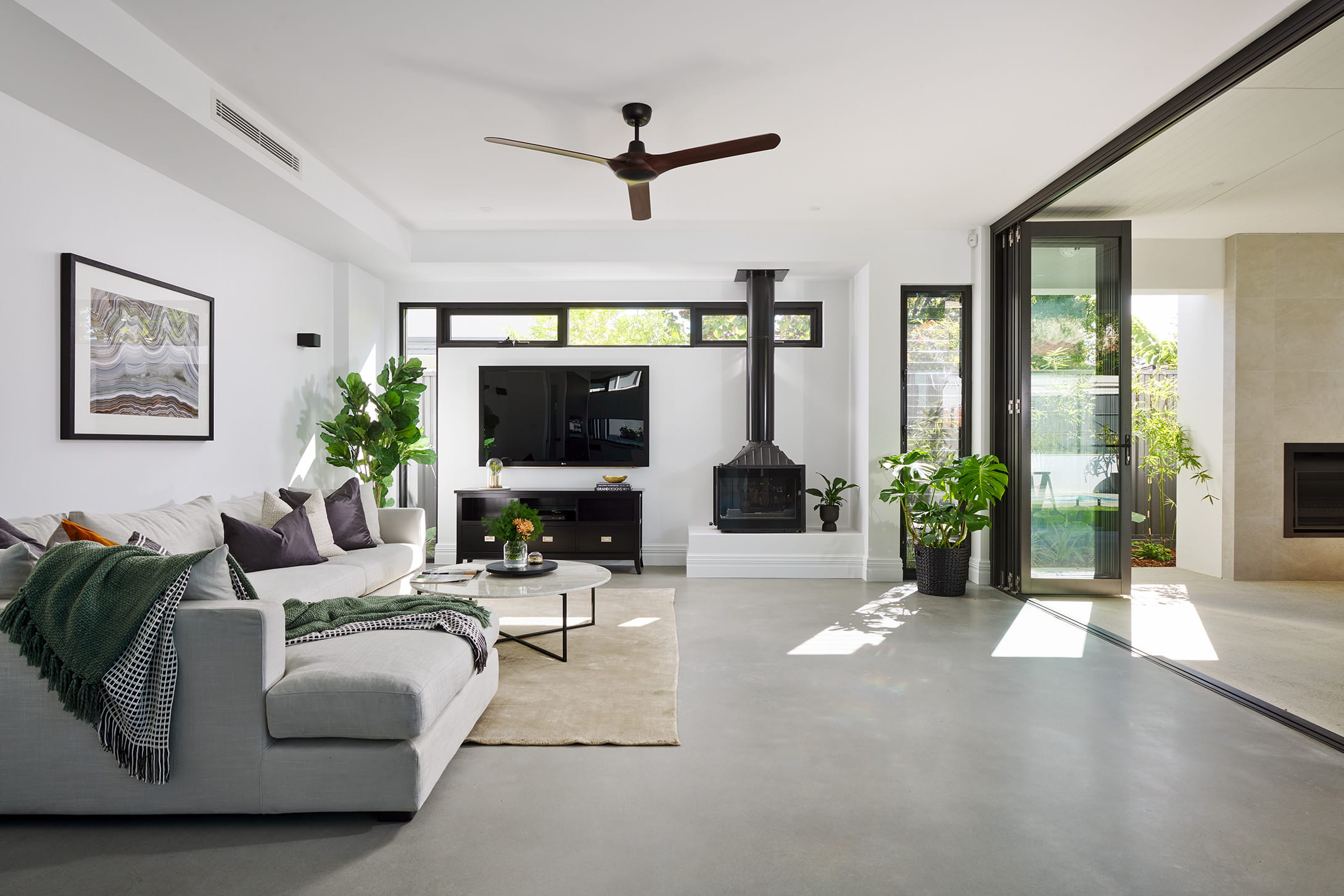 The materials that define high-end homes
Choosing the best flooring for luxury homes isn’t about defaulting to the most expensive option in every room. It’s about understanding what each material does well and where it belongs. In custom home builds with Stannard, material selection is always guided by how each space will be used, not just how it looks.
Engineered timber
Engineered timber has become the preferred choice in high-end residential builds, and once you understand the construction, it’s easy to see why. A genuine hardwood veneer is bonded over a multi-layered plywood core, with each ply running perpendicular to the last. That cross-grain structure delivers the authentic warmth and grain of solid timber with far greater dimensional stability, meaning it resists the warping, cupping, and seasonal movement that solid boards are prone to in Perth’s climate.
European Oak remains the most popular species for its refined grain and ability to take bespoke stains, from pale Scandinavian washes to deep smoky tones. For something with more natural density and character, Australian hardwoods like Spotted Gum and Blackbutt offer striking colour variation and exceptional hardness.
Across recent Stannard builds, there’s been a clear shift toward warm earth tones, rich walnuts, honey oaks, and sandy neutrals, paired with matte or wire-brushed finishes that hide everyday dust and minor scuffs far better than high-gloss alternatives. Parquetry patterns like herringbone and chevron are also popular choices, adding a layer of bespoke craftsmanship that a simple straight-plank layout can’t match.
Natural stone
Nothing replicates the visual weight of natural stone. Each piece carries its own character, from the soft variation of limestone to the warmer, more textured feel of travertine.
In Perth homes, limestone and travertine are among the most commonly specified natural stones for flooring, particularly in outdoor and alfresco areas, as well as indoor-outdoor transitions. Their lighter tones work well with the local climate and coastal lifestyle, staying noticeably cooler underfoot in summer while creating a relaxed, grounded aesthetic throughout. In custom homes built with Stannard, these materials are often used to create a seamless connection between interior spaces and alfresco areas.
Travertine’s natural porosity allows it to dissipate heat effectively, and its pitted surface provides slip resistance when finished in a tumbled or honed texture. This makes it particularly well-suited to spaces that transition from indoors to outdoors, and in some cases, it may be continued internally to maintain a cohesive flow.
Limestone is more commonly used in external applications, where its cooler surface and durability make it ideal for alfresco areas and pool surrounds.
Polished finishes, while visually striking, can become slippery when wet. For that reason, tumbled, honed, or brushed finishes are typically preferred for flooring, particularly in alfresco areas and around pools. To balance beauty with practicality, natural stone is often paired with large-format porcelain tiles in similar tones, creating a cohesive look while offering a more durable, low-maintenance solution in high-traffic zones.
Porcelain tiles
For the visual impact of natural materials without the ongoing maintenance, porcelain tiles are a highly versatile option in a luxury home. Advances in manufacturing mean today’s porcelain can convincingly replicate stone, timber, or concrete, while offering exceptional durability and ease of care.
Stone-look porcelain, in particular, is often used as a lower-maintenance alternative to natural stone. It delivers a similar aesthetic with no sealing requirements and far greater resistance to staining, scratching, and moisture, making it well-suited to kitchens, high-traffic areas, and indoor-outdoor transitions.
Large-format porcelain takes this a step further. Panels can extend up to 3.6 metres in length, creating near-seamless surfaces with minimal grout lines and a more refined, architectural feel.
For homes with kids, pets, or frequent entertaining, porcelain offers a balance of beauty and practicality that’s hard to match.
Polished concrete
Polished concrete suits luxury homes that lean toward clean contemporary lines. Beyond aesthetics, it performs well in Perth’s climate. Concrete naturally absorbs heat during the day and releases it as temperatures drop, helping regulate indoor comfort across the evening.
It’s also highly durable and low-maintenance, making it a practical choice for busy households. The trade-off is comfort underfoot. Without underfloor heating, it can feel firm and cool, especially in winter. For that reason, it’s most often used in main living zones and paired with softer materials like carpet in bedrooms to create balance throughout the home.
Luxury carpet for quiet zones
Bedrooms, theatres, and private retreats benefit enormously from premium carpet. Wool is the go-to in high-end builds: a naturally renewable fibre that regulates temperature, resists fire, and dampens sound.
Nicola’s preference is clear: “I prefer a flat pile myself. I don’t like seeing streak marks on carpets. I do love wool. It’s very hard-wearing and cleans up really well.”
In a home with stone or concrete throughout the living areas, wool carpet in the bedroom creates an immediate atmospheric shift. Quieter, warmer, softer. That contrast is part of what makes a luxury home feel layered rather than one-note.
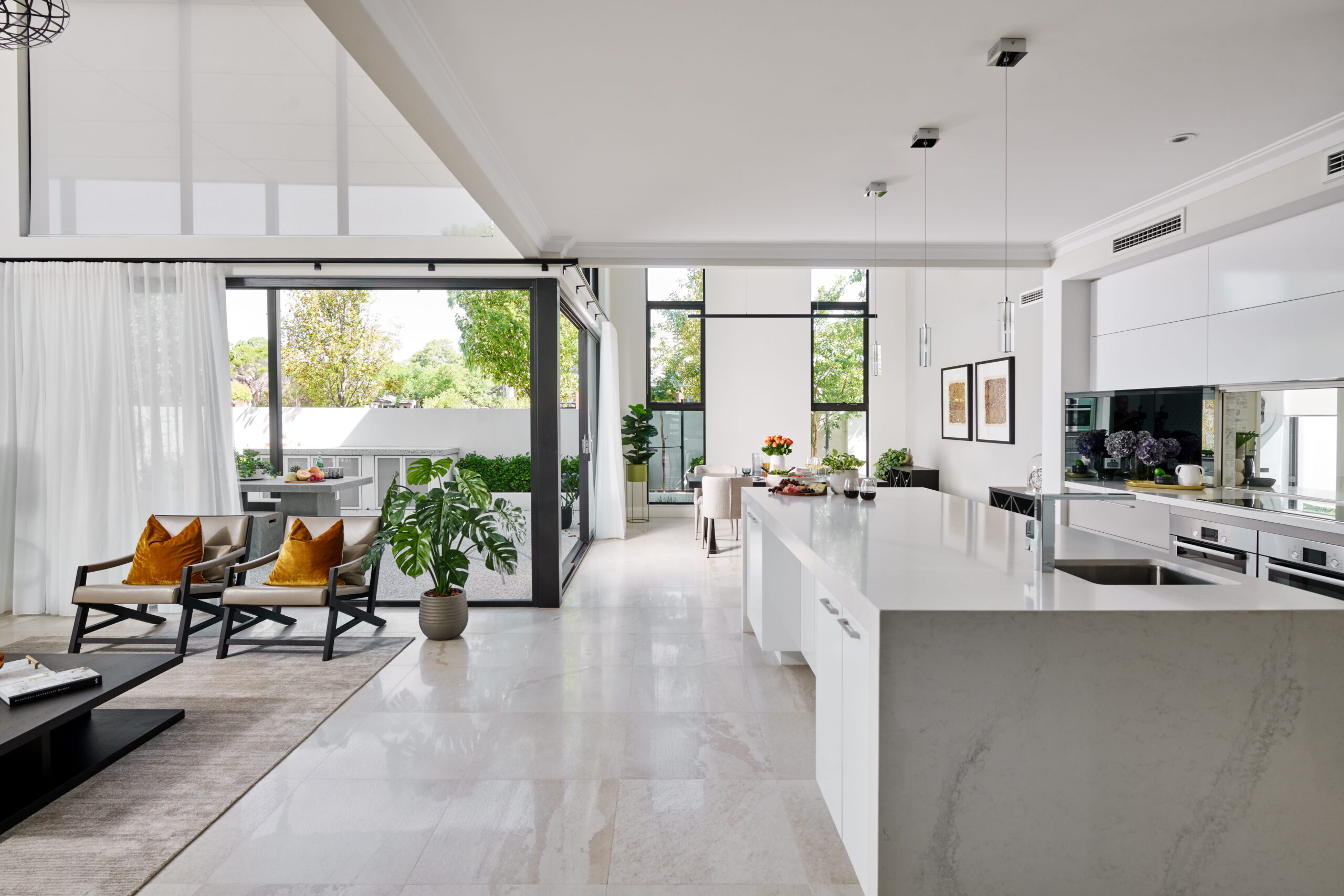
Matching your floors to the way you actually live
The best flooring for luxury homes isn’t determined by what looks most impressive in a display home. It’s determined by how you live. This is typically resolved early in the design phase at Stannard Homes, with flooring decisions guided by how each space will actually be used.
Nicola divides the home into functional zones early. “Bathrooms and laundries, it’s always a tile. For the rest of the home, it depends on foot traffic, whether they’ve got young children, the practicalities of everyday life.”
Tiles and stone handle wet areas and kitchens. Timber brings warmth to living spaces. Carpet softens private quarters. And where clients want timber’s look but need more forgiveness, Nicola notes, “there are some amazing tiles in the market now that look like timber. They kind of give you the best of both worlds.”
The indoor-outdoor connection matters in Perth, where the alfresco often functions as a second living room for eight months of the year. Running the same material, or a visually coordinated version, from inside to the patio makes both areas feel larger and more connected. Light-toned travertine and exterior-grade porcelain stay cool underfoot even in direct summer sun.
Creating flow across an open-plan home
In an open-plan layout, flooring holds everything together. When it works, you don’t notice it. You move through the space, and it all feels connected. When it doesn’t, the home feels disjointed. This is something clients often struggle to visualise until they see it brought together.
Nicola’s key principle is cohesion through undertone. “The doorway is where we would change flooring from one to the next. Tone is the key, making sure the undertone is similar and that it still feels cohesive within that home.”
That applies whether you’re running one material throughout or mixing media, say, engineered timber in the living area transitioning to porcelain tiles in the kitchen. Mixed-media flooring works when transitions feel intentional. If the tones clash or the change happens at an arbitrary point, it reads as an afterthought.
As a rule, limiting the home to two primary flooring materials (plus carpet in bedrooms) keeps the design grounded.
Nicola uses flat lays to help clients visualise these relationships before anything is locked in. “We start with one particular material and build from there, then stand back, reassess…and just keep interchanging those elements. Clients can actually see when things aren’t working. It gives them confidence in their decision-making.”
Balancing beauty with real-world durability
Every material has trade-offs. Understanding them before you sign off is far cheaper than discovering them after handover. These are the kinds of decisions clients are guided through during the selections process.
Natural stone requires professional sealing every 12 to 24 months. Acidic spills will etch polished finishes if not wiped quickly. Engineered timber is lower maintenance, but grit and sand act like fine sandpaper underfoot. In coastal Perth suburbs, regular sweeping and good entry matting make a real difference. Matte and wire-brushed finishes conceal dust, scratches, and pet hair far better than high-gloss. Porcelain is the lowest-maintenance luxury option: no sealing, no special cleaners.
Perth’s climate adds another layer. As Australia’s sunniest capital, the city’s intense UV causes timber to shift colour over time. Most flooring warranties exclude UV changes, so understand how your species will evolve and use window treatments in west-facing rooms.
Humidity swings also matter. Bureau of Meteorology averages show relative humidity ranging from 43% in January to 63% in June, and that seasonal movement is exactly why engineered timber outperforms solid wood here. Its cross-laminated construction neutralises the expansion and contraction that causes gapping in traditional boards.
Nicola’s advice? Lean toward materials that won’t date. “Anything that feels natural, timber and natural stone, travertine, those sorts of options really do lend themselves to our lifestyle. If something looks natural, it’s going to look beautiful for a very long time.”
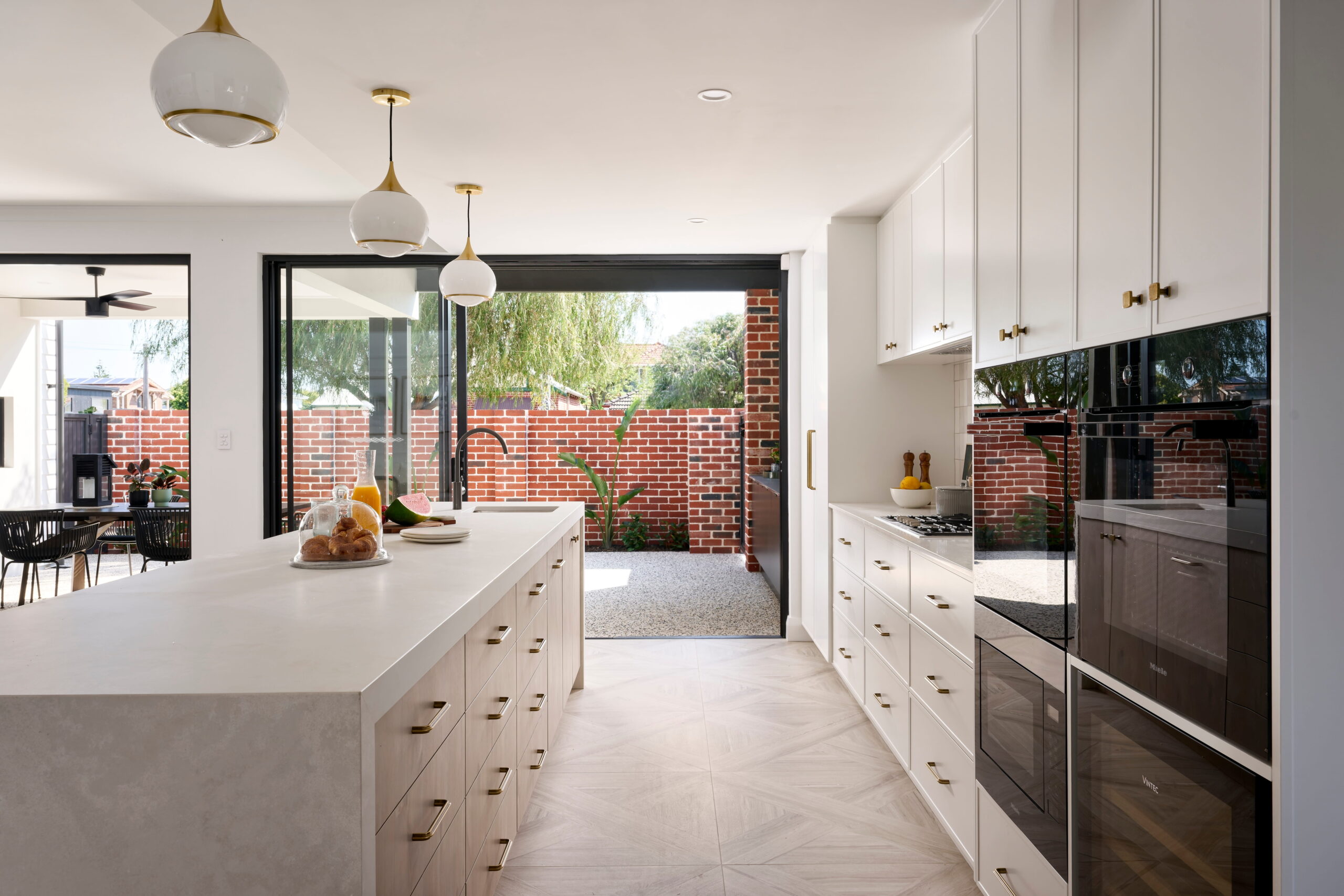
How Stannard Homes helps you get it right
Selecting the best flooring for a luxury home involves hundreds of decisions, and it’s easy to feel overwhelmed comparing samples across multiple rooms and finishes.
That’s where Stannard Homes’ approach makes a difference. Every client works with interior designer Nicola Draper-Henkel as a standard part of the build process, not an optional extra. During a dedicated selections day at Design Home on Churchill in Subiaco, Nicola helps establish the overall direction of the home, guiding clients through the key material and finish selections that set the tone for everything that follows.
“I always want them to have an enjoyable experience. I don’t want them to feel rushed or overwhelmed,” Nicola explains. “We present a few options that will work, so no matter what they choose, they’re going to make the right decision.”
For flooring specifically, Nicola works directly with clients to narrow the field based on how they live, then submits selections to Lee, the client selections and finishes consultant, and the build team. “We talk about their lifestyle, how they live as a family. That helps narrow things down. Then we’re looking at colour palettes, textures and materials, a series of flat lays to get them comfortable with how their home is going to look as a whole.”
This is where the in-house model pays off. The designers, interior designer, selections consultant, and construction team all work under one roof, so there’s no gap between what’s chosen in the showroom and what’s installed on site. The flooring you approve is the flooring you get, installed by trusted tradespeople who’ve worked with the team for years.
It’s a process refined across 65 years of building custom homes in Perth, and one of the reasons Stannard Homes clients describe the experience as easier, and more enjoyable, than they expected.
The floor is where it all begins
Every finish in your home sits on top of the floor, both literally and in terms of design hierarchy. Get it right, and the entire interior clicks into place.
The best flooring for a luxury home isn’t about chasing trends or picking the most expensive slab in the showroom. It’s about choosing materials that match how you live, that age gracefully under Perth’s demanding sun, and that create a foundation you won’t want to change in fifteen years.
If you’re planning a home where every detail, right down to what’s underfoot, reflects the quality of the finished product, get in touch with our team. It’s a conversation worth having early, and one that starts with getting the details right from the very first selection.
Frequently asked questions
1. What is the best flooring for a luxury home?
There’s no single answer. The best flooring for luxury homes depends on the zone. Engineered timber, porcelain tiles and polished concrete are popular for living areas, porcelain also excels in high-traffic and wet zones, and premium wool carpet is ideal for bedrooms and theatres. The right combination depends on your lifestyle and how you use each space.
2. Is engineered timber better than solid timber for Perth homes?
In most cases, yes. Engineered timber’s cross-laminated construction resists the expansion and contraction caused by Perth’s humidity swings, from around 43% in summer to 63% in winter. Engineered boards with a 4–6mm wear layer can be sanded and refinished multiple times, offering a comparable lifespan.
3. What flooring works best for indoor-outdoor living in Perth?
Light-toned travertine, limestone, and exterior-grade porcelain are strong choices. They stay cooler underfoot in direct sun and can be visually coordinated with internal flooring for continuity. Always specify tumbled, honed, or brushed finishes outdoors for slip resistance.
4. How do I choose flooring that won’t date?
Natural materials age most gracefully. Timber, stone, and travertine have been used in fine homes for centuries. Avoid chasing trends in fixed finishes. Experiment with soft furnishings and decor that can be swapped later.
5. When in the build process do you choose flooring?
Flooring is typically selected during the interior design and selections phase, after the floor plan and exterior are finalised. Because it influences every other interior finish, it’s one of the first materials locked in.


