

May 26, 2026
The quick version
- Luxury home finishes define how a space feels to walk through, sit in, and live with every day.
- Statement finishes should be reserved for focal points. Everything around them needs to be refined enough to support, not compete.
- Texture is the primary tool for creating depth and interest in modern luxury interiors.
- Cohesion comes from undertone, not uniformity. Repeating a restrained palette of two or three core materials from room to room creates calm and flow.
- Natural materials like stone, timber, and metals with a living patina age gracefully and won’t date the way trend-driven finishes do.
- In Perth, material finishes need to handle intense UV, coastal air, and the constant shift between indoor and outdoor living.
Two homes can share the same floor plan, the same room dimensions, and sit in the same suburb. One feels ordinary. The other stops you before you’ve made it past the hallway.
That gap has almost nothing to do with size or layout. It’s in the finishes. The stone you chose for the island bench. The way a cabinetry profile catches afternoon light. The shift in texture between a polished entryway and the warmth of timber through the living zone. These are the decisions that separate a house that photographs well from one that genuinely feels considered to live in.
Luxury home finishes aren’t about spending more on every surface. They’re about knowing where to invest, where to hold back, and how to make materials work together so the entire home feels like a single, deliberate thought.
Interior designer Nicola Draper-Henkel works closely with clients throughout the Stannard Homes design process to shape material selections, and those choices play a defining role in how a luxury home comes together.
How luxury home finishes define the character of a home
Walk into a well-finished home, and you register it before you consciously process any single detail. The warmth of timber underfoot. The weight of a stone benchtop beneath your hand. The soft play of light across a textured plaster wall. These sensory cues shape how a room makes you feel, and they accumulate as you move through the home. It’s often in these early decisions that the overall feel of the home starts to take shape, something Stannard Homes places a strong focus on when guiding clients through finishes.
Nicola describes it as the accumulation of small, deliberate choices: “It’s those little details, those finishing touches that we want to get absolutely right. Things like beautiful handles, hardware on doors, cabinetry detail, natural stone benchtops, archways, and beautiful cornices. Individually, they’re not so important, but when you bring them all together, they take the home to the next level of luxury.”
No single finish makes a luxury home. It’s the conversation between all of them: how the metallic tone of a door handle relates to the pendant light above the dining table, how the stone on your kitchen island echoes the material framing the fireplace. When those relationships are considered, the home feels inevitable. When they’re not, something always feels slightly off.
Research into biophilic design reinforces this. Studies show that exposure to natural materials like timber can lower blood pressure and reduce stress, while textured, tactile surfaces influence how spacious, calm, or energising a room feels. The material finishes you choose aren’t decoration. They’re shaping the emotional experience of your home.
Knowing where to make a statement and where to hold back
One of the most common mistakes in a high-end interior is letting every surface compete for attention. It’s a balance we work through with clients, helping define which finishes should take the lead and which are there to support them. A heavily veined marble island sitting beside a bold splashback tile, with an ornate tapware finish layered on top. Individually, each piece might be beautiful. Together, the eyes have nowhere to rest.
Nicola’s approach is restrained with purpose. “Statement finishes, we tend to want those to be our focal points. A beautiful natural stone on the outside of the home, maybe flanking a fireplace, or a kitchen island that’s got real personality to it. But then all those finishes surrounding those statement pieces need to be complementing them, rather than trying to vie for the attention. They’ve gotta be a little bit more subtle, a bit more pared back, so they can sit alongside those finishes and let them really be the heroes.”
This is where many interiors fall apart: the hero pieces are strong, but the supporting materials haven’t been considered with the same care. A dramatic stone bench paired with a generic tile floor and standard cabinetry creates a disconnect. The bench says one thing; the room says another. In a custom home where every detail is considered, the quieter finishes do just as much work. They’re simply not asking for your attention in the same way.
Where clients want to infuse personality, Nicola steers toward controlled moments: “A beautiful natural stone island bench top, a splashback tile in the kitchen or laundry, feature tiles in the bathrooms. They’re all fixed finishes, permanent, but there are ways we can make the home unique.”
Why texture matters more than colour
In a neutral palette, which is where most luxury interiors land, texture is what prevents a home from feeling flat. Without it, a room full of beautiful materials can still feel lifeless. With it, even the simplest palette develops warmth and visual movement throughout the day as light shifts across different surfaces. Depth is created by layering finishes rather than relying on colour alone.
Nicola is unequivocal: “Texture is so important in creating depth and interest in a luxury interior. If you can imagine, everything has a flat finish to it, it’s just going to fall flat. We need to bring that depth and interest in.”
Australian designers increasingly describe texture as the new luxury, replacing bold colour as the primary tool for building atmosphere. Picture what that looks like in practice: a honed stone benchtop beside wire-brushed timber cabinetry. A hand-trowelled Venetian plaster feature wall catching raked light from a clerestory window. The cool smoothness of a brushed nickel handle against the grain of an oak door. Each surface interacts with light and touch differently, and that interplay is what gives a room its sense of richness.
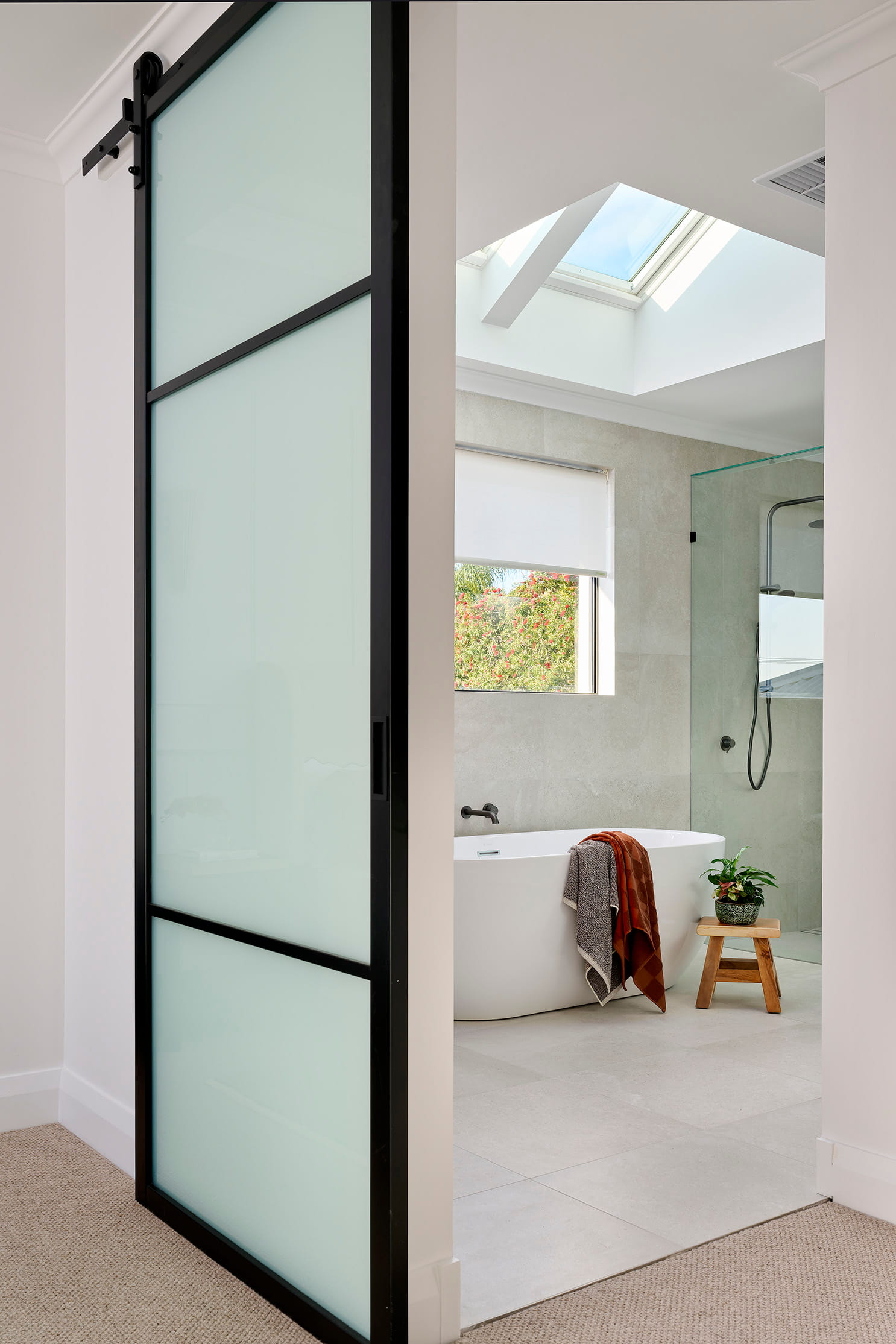
Nicola builds this into every selections day: “We do that with beautiful natural stones, timbers, natural patina and metallic finishes, aged mirror, all sorts of amazing finishes. When working together, they create that beautiful, timeless feel and make the home feel very, very bespoke.”
Making stone, timber, and metal work together
A luxury home might use natural stone in the kitchen and bathrooms, engineered timber through the living areas, bronze or brass hardware throughout, and textured plaster on a feature wall. Getting each of those right individually isn’t the hard part. The challenge is making them all feel like they belong in the same home.
Nicola’s guiding principle is undertone. “Most textures will work with one another. It’s more about the actual colour palette and the tone of those individual elements.” In practice, that means warm-toned timber pairs naturally with bronze hardware and travertine stone. Cool-toned cabinetry sits better with brushed nickel or black finishes and lighter marbles.
She also notes a useful shortcut: “Black and brushed nickel are kind of the neutrals in all of this. They work beautifully with any scheme.” For clients struggling to commit to a metallic direction, those two finishes offer a safe anchor that complements virtually any palette.
The mechanism for testing all of this is the flat lay. “The flat lay process is essential. We try different finishes, see what’s working, see what’s not, add things in, take them away, and just stand back and reassess.” Materials are placed physically alongside each other and adjusted until the whole palette feels cohesive. It sounds simple, but it’s remarkably effective at catching clashes that would otherwise only become apparent once the materials are installed.
Luxury home finishes that stand the test of time
Trend-driven finishes have a short shelf life. What feels exciting in a showroom can feel tired within five years, and when you’re investing in your dream home, that can be an expensive regret.
Nicola asks every client the same question: “How will you feel about that finish in five years time?” It’s disarmingly simple, and it almost always shifts the conversation toward durability and timelessness.
Her recommendation is consistent: “Finishes that always age well is anything derived from nature. Marble bench tops, natural stone, timber floors, travertine. Along with beautiful metals such as bronze and brass, especially if they’ve got a natural patina to them. Those are all timeless elements.”
If a client wants to experiment with something bolder, Nicola’s advice is to keep it to elements that can be changed: “We can bring those additional colours in with soft furnishings, with rugs, with art. Things that are easily changed afterwards.” The fixed finishes stay timeless. The personality comes from the layers on top.
Designing material finishes for Perth’s climate and lifestyle
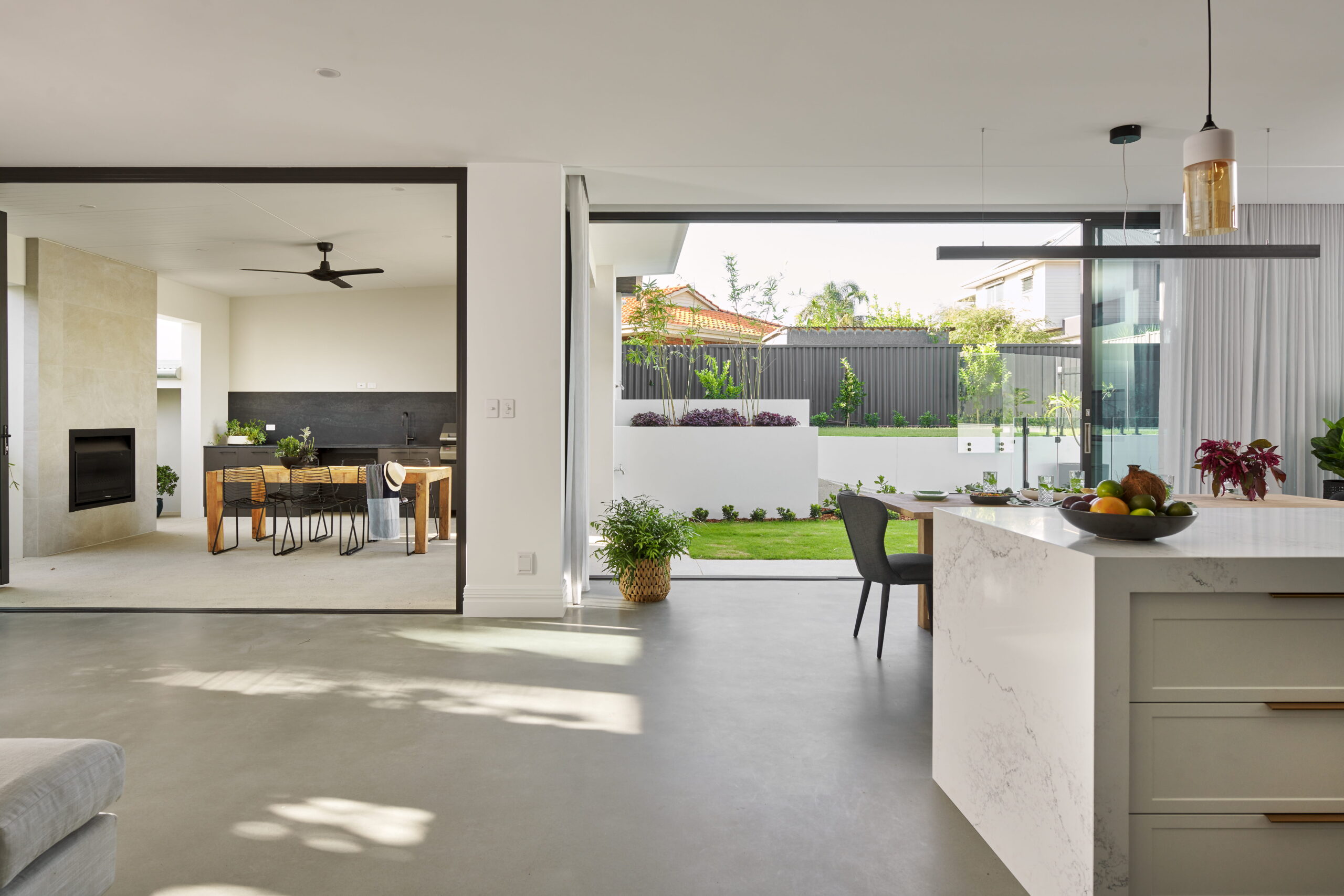
Perth’s sunlight and coastal conditions place specific demands on interior finishes. At Stannard Homes, materials are selected with these factors in mind, balancing how they look on day one with how they perform over time.
UV exposure gradually fades timber and warms colour tones. Coastal air can accelerate corrosion on unprotected metals, while sand is tracked inside daily. And because indoor-outdoor living is central to how Perth homes are used, finishes need to perform across both environments, often on the same sightline.
Nicola gravitates toward materials that suit these conditions naturally: “Timber and stone are the two go-tos for pretty much every home in some capacity. It just lends itself to our beautiful coastal lifestyle.”
For indoor-outdoor transitions, light-toned limestone stays cool underfoot even in peak summer. Running coordinated materials from the living area through to the alfresco creates the visual continuity that makes both spaces feel larger. Honed or tumbled stone finishes handle sand and foot traffic better than polished surfaces, which show scratches and wear more readily.
For metals, the move toward natural patina finishes is practical as well as aesthetic. Lacquered chrome can dull and peel in humid, salt-laden air. Raw brass and bronze simply age, and in Perth’s bright light, that evolving warmth becomes part of the home’s character rather than a maintenance problem.
How Stannard Homes helps you get every detail right
Choosing material finishes across an entire custom build means coordinating hundreds of individual decisions: stone, timber, tile, cabinetry profiles, metalware, wall treatments, and benchtop edges. It’s the stage where many clients feel most overwhelmed, and where the gap between a good home and a great one often opens up.
That’s why every Stannard Homes client is supported with selections from the beginning of the build process. Interior designer Nicola Draper-Henkel leads the initial consultation, helping define the overall direction of the home, from colour palette and mood to key finishes like flooring, cabinetry colours, benchtops, and tiles. This is explored through the flat lay process, where materials are viewed together to understand how they interact before anything is finalised.
From there, the focus shifts to refining the detail. Working with Lee, the client selections and finishes consultant, clients move through the more specific decisions, such as cabinetry profiles, tapware, doors, paint, and other finishes, ensuring each element aligns with the direction already established.
“I always want them to have an enjoyable experience,” Nicola shares, “I don’t want them to feel rushed or overwhelmed. I present two or three things that I think will work. They feel empowered to make the right decision, no matter what. There’s nothing that can be wrong out of those choices.”
With that direction clearly established early, selections are carried through consistently into documentation and construction, reducing the risk of disconnect between what’s chosen and what’s delivered. It’s a process refined across 65 years of building custom homes in Perth, and one that allows every finish, no matter how small, to contribute to the overall feel of the home.
 Every surface tells a story
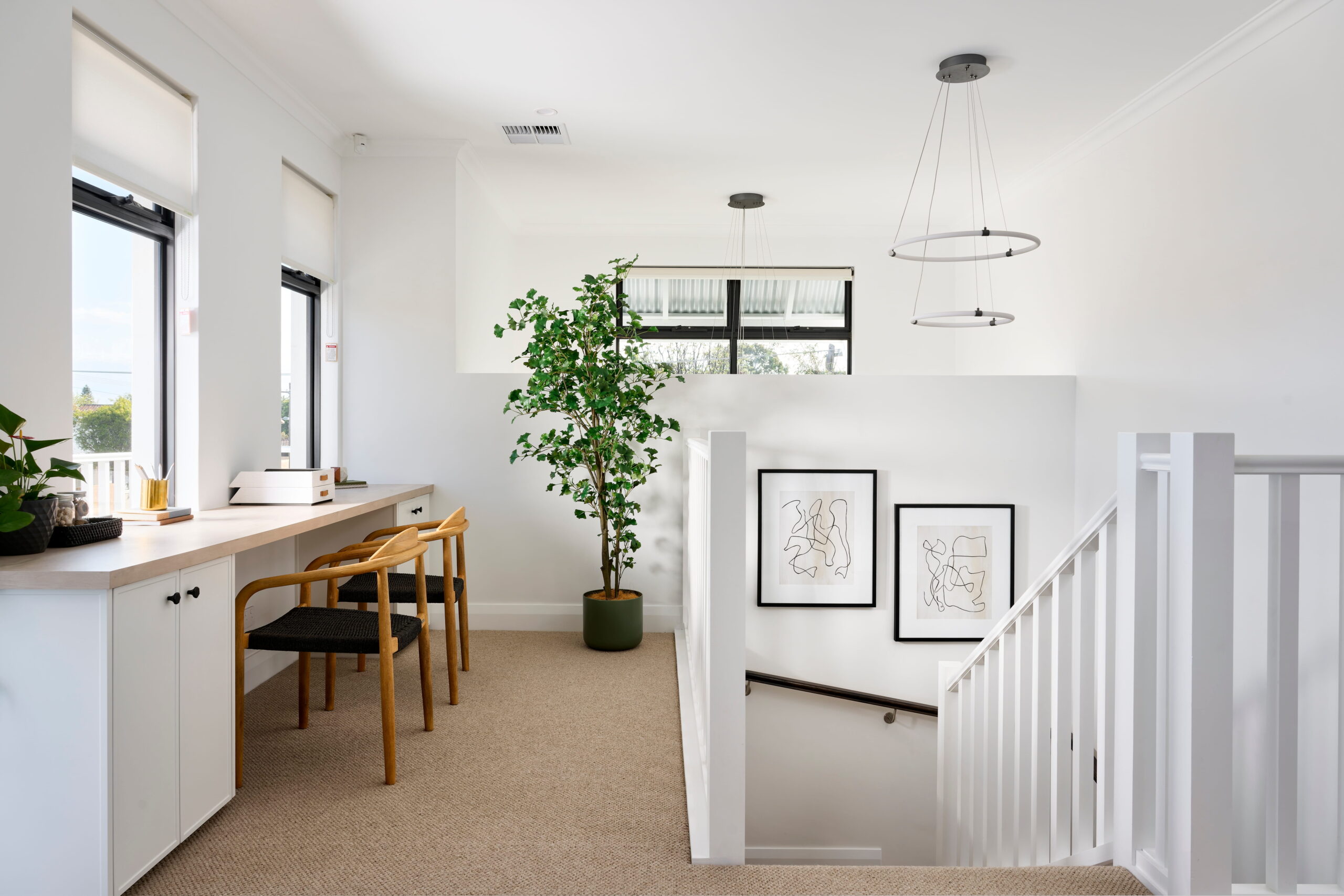
The homes that feel most considered aren’t the ones with the biggest budget or the rarest marble. They’re the ones where every material finish has been chosen with the same level of care, where the quiet surfaces support the bold ones, and where you can run your hand along a benchtop, a door handle, a wall, and feel that someone thought about how each one would land.
That’s what the best luxury home finishes do. They don’t shout. They accumulate, quietly, into something that feels unmistakably yours.
If you’re planning a custom home where those details matter from the very first selection, get in touch with the Stannard Homes team. It’s a conversation that starts with how you want your home to feel.
Frequently asked questions
1. What are the most important finishes in a luxury home?
The finishes with the greatest impact are the ones you see and touch most often: flooring, benchtops, cabinetry, hardware, and wall treatments. Getting these right sets the tone for the entire interior. Smaller details like cornices, door profiles, and edge treatments then reinforce the overall quality.
2. Should I choose bold or neutral finishes for a custom home?
Neutral, natural finishes in fixed elements like stone, timber, and cabinetry give you the longest lifespan and the most flexibility. Personality and colour are best introduced through soft furnishings, art, and decor, which can be updated without renovating.
3. How do I make sure all the materials in my home work together?
The key is undertone consistency. Warm materials like timber, bronze, and travertine group naturally, as do cooler tones like grey stone, brushed nickel, and white marble. A flat lay process, where samples are placed physically side by side, is the most reliable way to test combinations before committing.
4. What finishes work best for Perth’s climate?
Natural stone and timber handle Perth’s conditions well. For outdoor areas, honed or tumbled limestone stays cool underfoot and conceals wear. For metals, unlacquered brass and bronze age gracefully in coastal air rather than degrading like lacquered chrome.
5. How does an interior designer help with finish selections?
A designer curates options based on your lifestyle and aesthetic, narrowing hundreds of choices to a manageable shortlist. They test combinations through flat lays, catch clashes early, and ensure every material works cohesively across the whole home rather than room by room.


