

September 29, 2026

The quick version
- The smartest homes start with good design, not good gadgets. Orientation, shading, ventilation, and passive performance come first. Technology supports that foundation; it doesn’t replace it.
- Perth’s 8.8 hours of daily sunshine and rising electricity costs make solar and battery storage one of the strongest investments in a custom home. Designed into the roof from the start, a well-specified system can significantly reduce and sometimes even eliminate energy bills.
- Lighting, climate zoning, security, and motorised shading have matured well past the novelty stage. Built into the floor plan from day one, they genuinely improve how you live without requiring a manual.
- AI has a role, but it’s a supporting one. The best applications handle things you don’t want to think about. The worst add complexity where none was needed.
- The single biggest factor in whether home technology works or creates problems is when it was planned. Designed in from the floor plan stage, it disappears. Added later, it almost always shows.
The gap between a home with technology and a genuinely smart home is wider than most people expect. Many homes end up with disconnected systems that never quite work together: speakers that won’t sync, lighting that requires three different apps, climate control that fights the shading rather than working with it.
What a smart home builder in Perth should actually deliver is something far quieter and far more practical. A house that stays cool through a 38-degree February afternoon without running the air conditioning at full capacity, because the orientation, glazing, shading, and climate system were designed as one connected piece. Lighting that shifts through the day so subtly you never notice it. Security that knows the difference between your teenager coming home late and someone who shouldn’t be there.
None of that requires your home to feel cold or futuristic. The best smart homes don’t feel smart at all. They feel like very, very good homes.
Good design comes before good technology
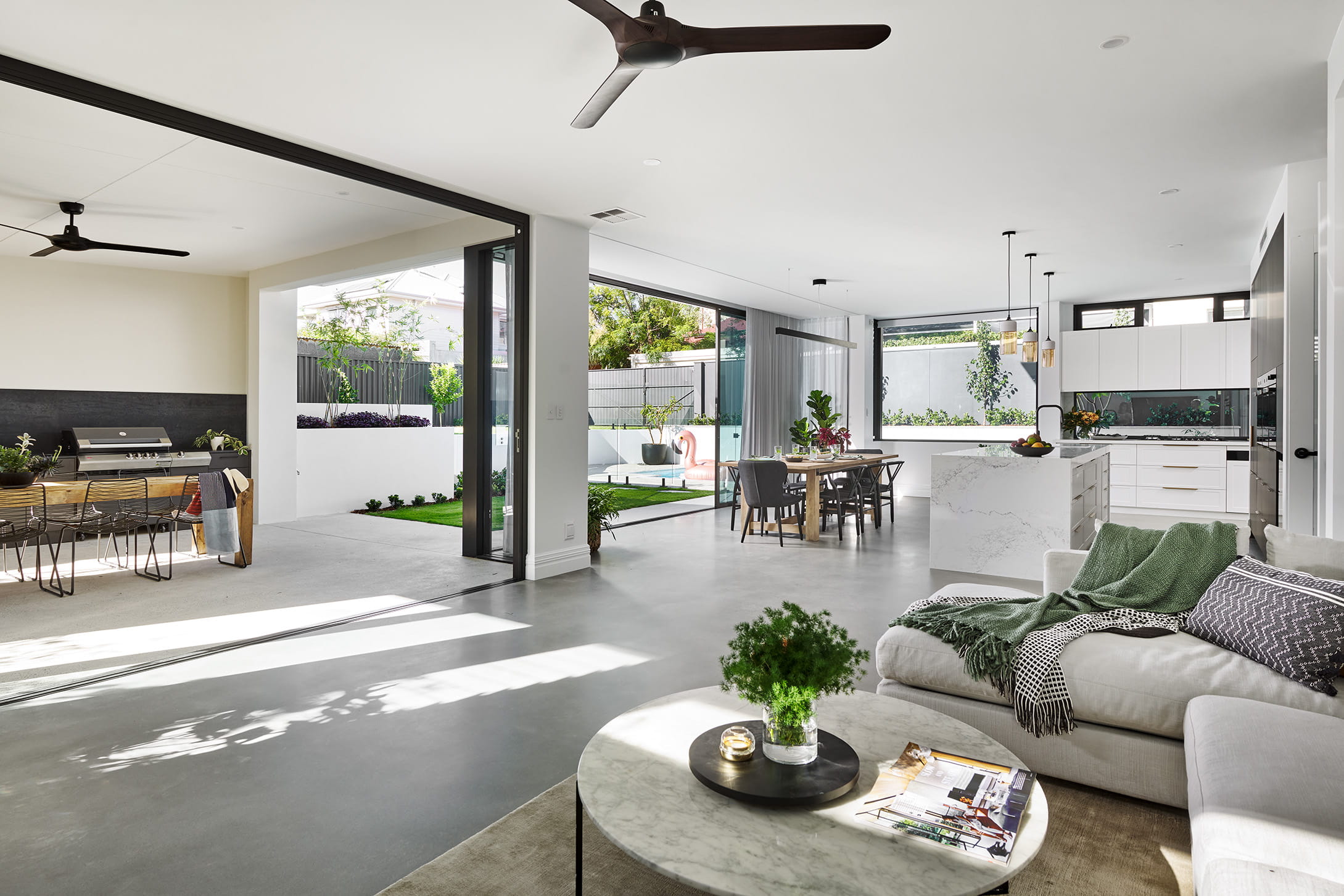
This is something we come back to with every client at Stannard Homes. Before we talk about automation platforms or structured cabling or battery systems, we talk about the building itself. How the home sits on the block. Where the sun hits at 7 am and where it hits at 4 pm. How cross-ventilation moves through the floor plan. Whether the eaves are deep enough to shade north-facing glass in summer while still letting winter sun in.
These are 65-year-old principles, and they do more for comfort and energy performance than any device you can buy.
Perth makes this conversation sharper than most cities. As Australia’s sunniest capital, Perth receives more than 11 hours of direct sunshine a day at the peak of summer. It’s a climate that rewards homes designed to respond to it and punishes those that don’t.
The cost side has shifted too. Synergy’s regulated residential tariff increased from 1 July 2025, and the WA State Government simultaneously removed the $400 annual electricity credit that had been cushioning household bills since 2020. If you’re running ducted air conditioning across multiple zones, a pool, a home office, and an electric vehicle charger, electricity is no longer a minor line item.
Then there’s how people actually live here. The alfresco isn’t a bonus room. It’s where dinner happens four nights a week for half the year. A smart home in Perth needs to extend into those outdoor spaces. Audio that stops at the back door, lighting that doesn’t reach the deck, climate thinking that ignores the outdoor living zone: these are gaps that show a builder hasn’t thought about how Perth families use their homes.
When the passive design is right, the technology you layer on top works harder, costs less to run, and does more with less. That’s the starting point.
The systems worth building in
Not every piece of smart home technology deserves a spot in a custom home. Some of it is genuine. Some of it is a solution looking for a problem. The systems worth integrating are the ones that make daily life better without requiring you to manage them.
Zoned, dimmable, scene-based lighting is one of the most impactful. The difference between a home with considered lighting and one with standard downlights throughout is the difference between rooms that feel warm and alive and rooms that feel flat. Systems that shift colour temperature through the day, cooler in the morning, warmer in the evening, work with your body’s natural rhythms rather than against them. In Perth, where natural light pours through well-placed windows for most of the year, your artificial lighting needs to complement that daylight. This is something our client selections and finishes consultant Lee works through with every client during the selections process, because lighting affects how every other finish in the home actually looks once you’re living there.
Ducted climate zoning that adjusts room by room is a genuine comfort upgrade, particularly in a two-storey home where temperature differences between levels can be significant. A smart thermostat paired with geofencing, where the system detects your phone approaching and begins cooling the house before you arrive, sounds ambitious but works reliably right now. In Perth’s summer, the gap between arriving at a cool home and arriving at one that’s been sitting in full sun since midday is immediately noticeable.
Security systems with object recognition and smart locks have matured to the point where they reduce false alarms rather than create them, distinguishing a person from a cat, a delivery driver from a stranger. Motorised shading that responds to sun position is a practical necessity for west-facing glazing, not an indulgence. And when blind pockets are built into the window reveals during construction, the blinds disappear entirely when retracted.
Ceiling-mounted invisible speakers distributed through living zones, bedrooms, and alfresco areas are now a standard expectation in premium builds. The keyword is invisible. You hear the music. You never see the speaker.
Everything above relies on structured cabling run throughout the home, a properly specified network, and a dedicated equipment location. It’s the least glamorous element and the most important. It’s also the part that’s nearly impossible to do properly once the walls are lined. One development worth knowing about: the Matter protocol, an open connectivity standard backed by Apple, Amazon, Google, and Samsung, means smart products from different brands now talk to each other reliably. For anyone building now, that’s less lock-in and less risk of devices becoming obsolete.
Solar, batteries, and why storage changes everything
Solar has gone from a nice environmental gesture to one of the most financially compelling decisions in a new Perth home. The question for a custom home build isn’t whether to include it. It’s how to design it properly.
Nearly half of detached homes in Western Australia already have solar. Synergy’s current buyback rates mean storing and using your own energy is now significantly more valuable than exporting it back to the grid. For premium homes with higher energy demands, battery storage is becoming an increasingly worthwhile investment.
That’s why battery storage has moved from a nice addition to a centrepiece. The WA Government’s Residential Battery Scheme and the Federal Cheaper Home Batteries Program currently offer combined rebates of up to $5,000 for eligible households, making the investment case stronger now than at any previous point.
The design implications go beyond buying panels and a battery. The roof needs optimal pitch and orientation for solar performance, which in Perth means north-facing surfaces at roughly 30 degrees. The battery needs a dedicated, ventilated location: a purpose-built enclosure in the garage or plant room, not a unit bolted to an exterior wall where it undermines the facade. Three-phase power should be specified at the design stage, not retrofitted later.
When energy performance is part of the home design and build process from the beginning, the result is a home that looks exactly as you intended with the energy system working quietly in the background.
Where AI helps and where it doesn’t
There’s a lot of noise around artificial intelligence in homes right now. Most of it overcomplicates a simple question: does this actually make my life easier?
Some of it does. Predictive energy management is the strongest example. A well-configured system analyses weather forecasts, your usage patterns, and electricity pricing to work out the smartest way to use your solar, your battery, and the grid at any given moment. If a 40-degree day is coming, it pre-cools the house in the morning using free solar energy rather than leaning on the air conditioning at peak tariff in the afternoon. That’s practical thinking backed by data.
Smart security that filters dozens of daily false alerts down to the handful that actually matter is another genuine quality-of-life improvement. So is occupancy sensing that knows whether someone is sitting quietly in a room or whether it’s genuinely empty, and adjusts the climate accordingly.
But your home should still feel warm. Personal. A place where your kids dump their schoolbags in the hallway, where the dog sleeps on the couch it’s not supposed to be on, where Sunday mornings involve the newspaper spread across the kitchen bench and someone burning toast. The best rooms in your house might be the ones where nothing is smart at all. A reading corner with good afternoon light doesn’t need a sensor. Your bedroom should feel like a retreat, not a control room.
Where AI is least effective is when technology performs for its own sake: a fridge with a touchscreen, a mirror that reads your heart rate, a robot that follows you from room to room. These make for impressive showroom demonstrations. They rarely improve a Wednesday evening at home with your family.
A good smart home builder in Perth should be comfortable telling you where the value sits and where it doesn’t. The homes people love living in, year after year, are the ones where the technology serves the lifestyle rather than competing with it.
Why this has to be planned from day one
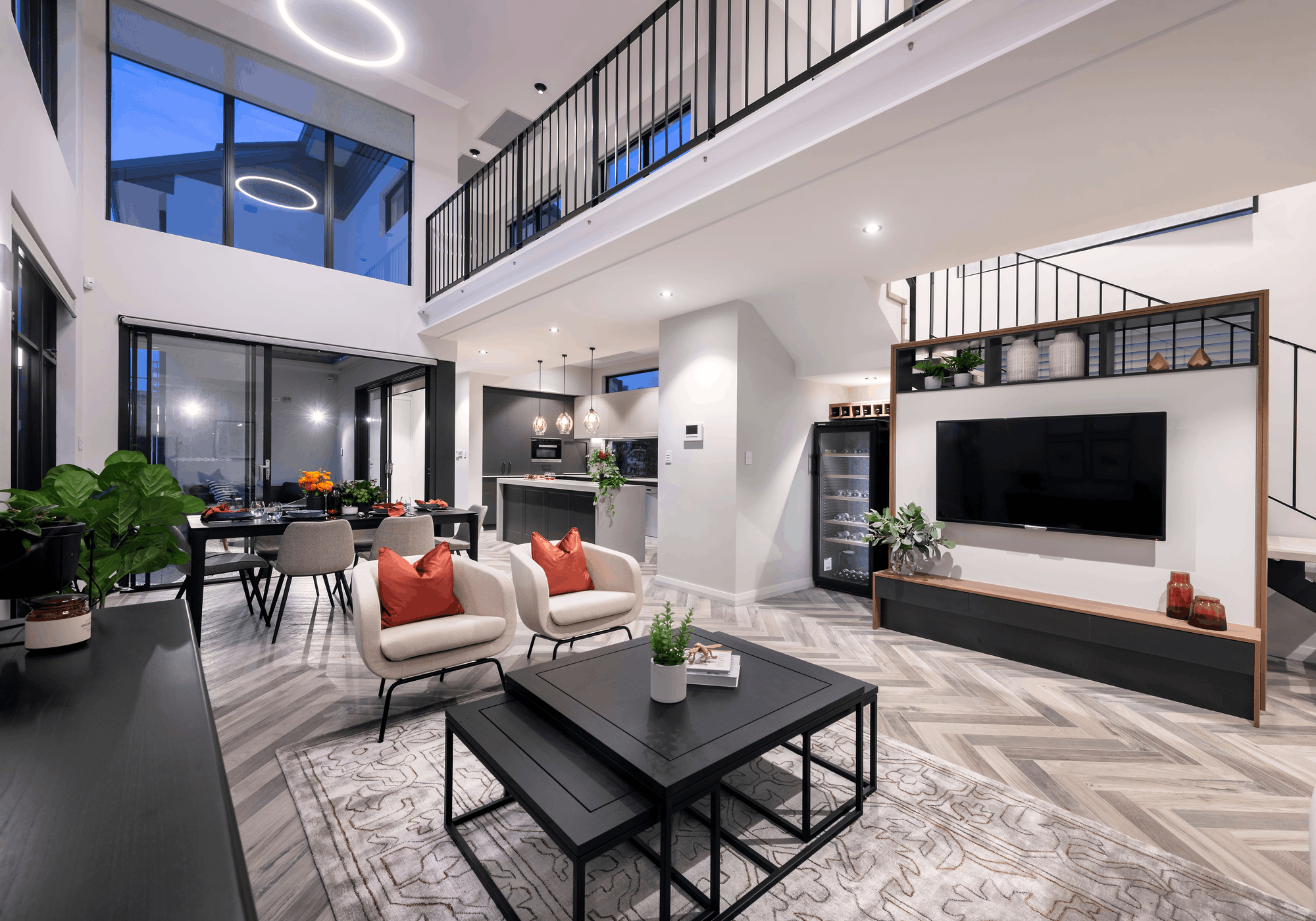
Every system in this piece, the lighting, the climate zoning, the solar, the battery, the cabling, only works properly when it’s part of the plan from the start. Retrofit it later, and you spend more, compromise the finish, and see the joins.
When structured cabling, conduit and equipment locations are considered early in the design and construction process, everything can be integrated cleanly from the outset. It creates flexibility for future technology while avoiding the compromises and additional cost that often come with retrofitting later.
At Stannard Homes, this is how we’ve worked for 65 years. The tools change. The principle doesn’t. Our design and build process means your lighting, wiring, spatial planning, and smart home infrastructure all come together under one roof. The same thinking that ensures your kitchen layout accounts for the 300mm cabinet beside the fridge so both doors actually open.
The real measure of a smart home isn’t how many devices it contains. It’s whether you notice the technology at all. A home that stays comfortable in every season, costs less to run than you expected, and looks exactly the way you pictured it. Nothing out of place. Nothing demanding your attention. Just a home that works.
If you’re starting to think about what your next home could be, we’d love to have that conversation. Get in touch with the Stannard Homes team to book a consultation, or visit one of our display homes to see what considered design feels like when you walk through the front door.
Frequently asked questions
1. What makes a smart home builder different from a standard builder?
A smart home builder in Perth designs the technology infrastructure into the home from the floor plan stage: cabling, conduit, equipment locations, solar-optimised roof orientation, and battery placement. A standard build might accommodate some of these features later, but retrofitting is more expensive, visually compromised, and limited by the existing structure. The difference is planning.
2. How much does smart home technology add to a custom build?
It depends on the scope. A foundational layer of structured cabling, conduit pathways, a dedicated equipment location, and pre-wiring for future automation can be a relatively modest addition when planned during the build. More comprehensive systems increase the investment, but they also deliver measurable returns in comfort, energy savings, and long-term property value.
3. Can I add smart home features to an existing home?
You can, with limitations. Wireless technology has improved, and some features like smart lighting and security cameras can be added after the fact. But the deeper infrastructure, including structured cabling behind walls, concealed conduit runs, motorised blind pockets, and solar-optimised roof orientation, is either very difficult or prohibitively expensive to retrofit. If these features matter to you, a custom home build is the most effective way to get them right.
4. Is solar and battery storage worth it in Perth?
Perth averages 8.8 hours of sunshine daily, making it one of the most productive cities in the world for residential solar. Adding battery storage can significantly reduce and sometimes even eliminate household energy costs. The WA Government’s Residential Battery Scheme and the Federal Cheaper Home Batteries Program currently offer combined rebates of up to $5,000 for eligible households, making the investment case stronger now than at any previous point.


